
Table of Content
-
, Volume 68 Issue 6
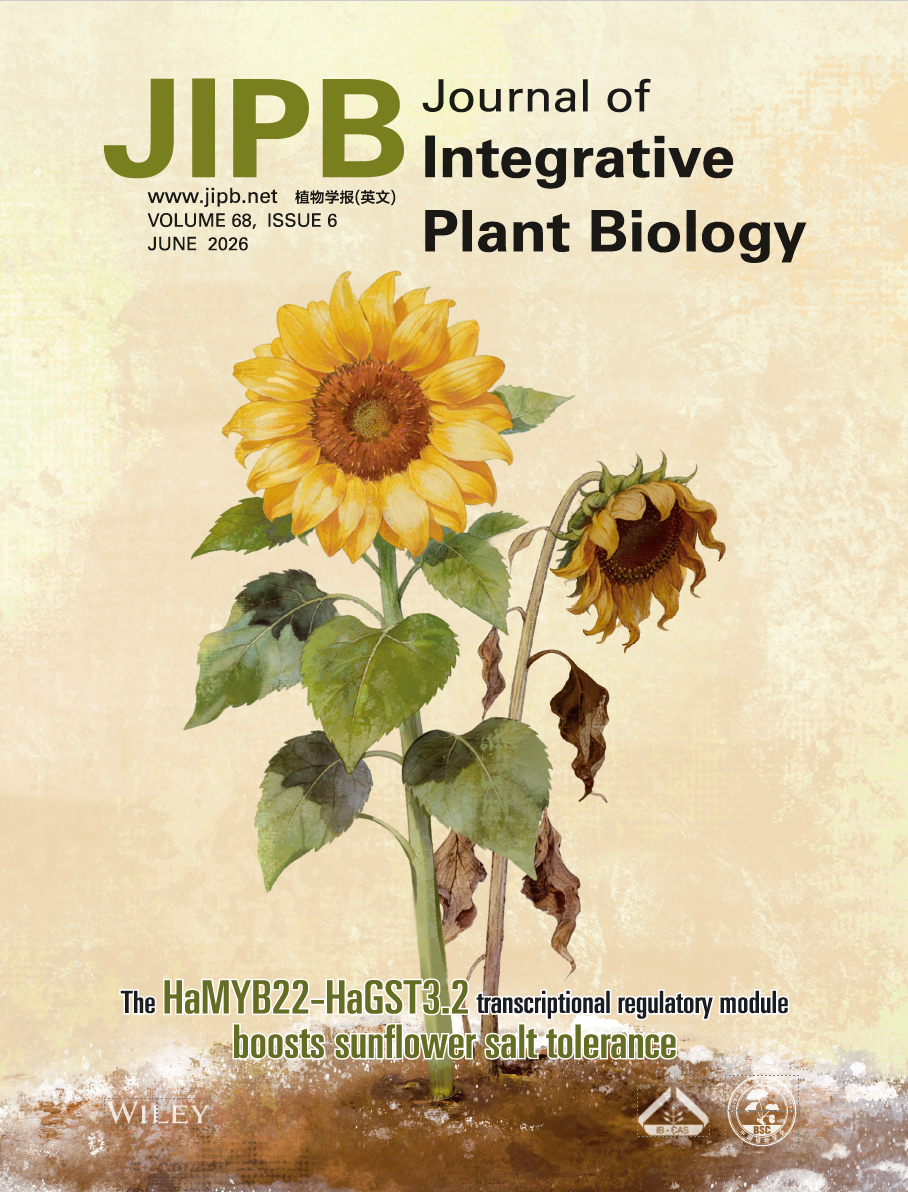
Cover Caption: Sunflower (Helianthus annuus) is a globally important oil crop, but salt stress caused by high soil salinity limits its production. Wild sunflower species have high salt tolerance and some germplasm accessions retain strong salinity resilience, even though much of it has been lost due to a genetic bottleneck. However, the genetic basis of these superior salt-tolerance traits remains to be explored. Zhang et al. (pages 1709–1726) reported that the MYB22–GST3.2 module regulates salt tolerance in sunflower, a key finding in understanding the mechanisms governing abiotic stress responses in this crop. The cover image shows a sunflower with an enhanced MYB22–GST3.2 module (left), exhibiting significantly stronger salt stress tolerance compared to the saltsensitive control (right). These findings highlight the potential of targeted molecular breeding strategies, using functionally validated gene modules, to accelerate the development of superior salt tolerant sunflower varieties suitable for marginal saline alkali soils. [Detail] ...

For Selected: 

Toggle Thumbnails



Special lssue:






 Scan the QR code to view JIPB on WeChat